
Another proven conspiracy! CIA mind-control through vaccines and ... worse! (3 free ebooks)
In their war against freedom, the target is to conquer your mind by whatever means.
Like all intel agencies, the CIA was founded and is still commanded by freemasons.
If you know about Project Artichoke jump to the comment section which has information about other programs.
Project Artichoke (art of choking?)
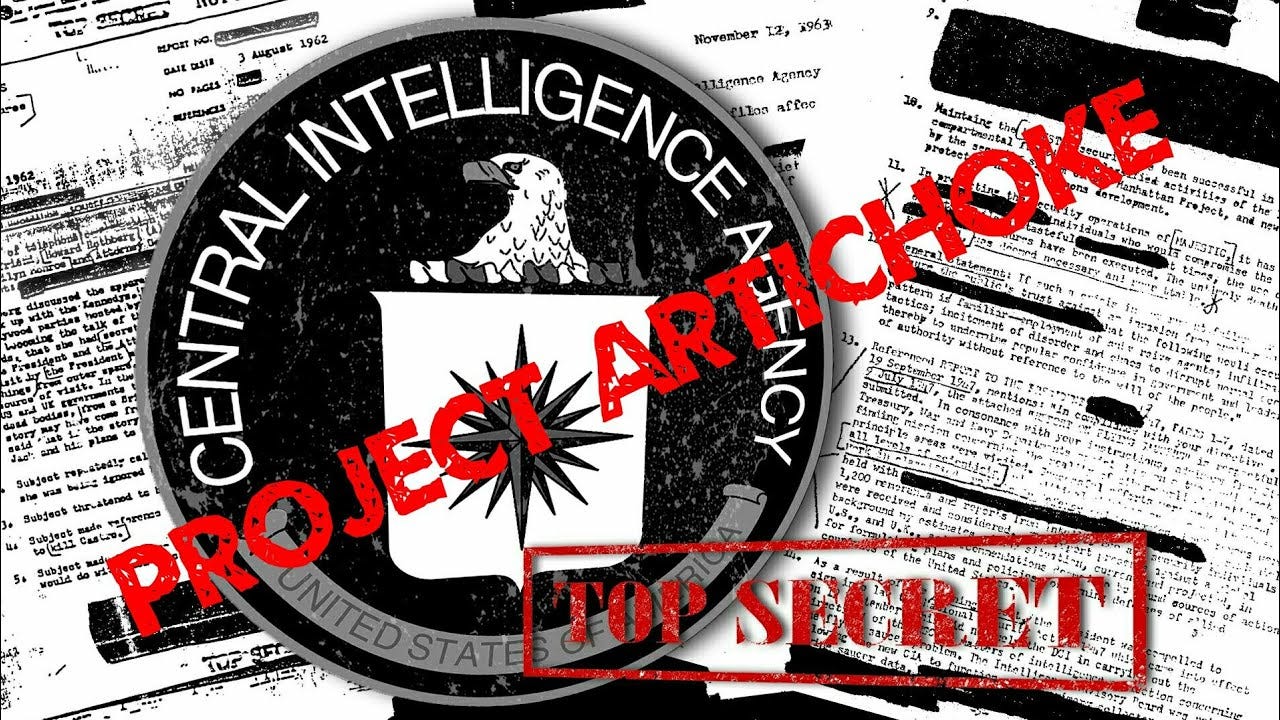
23 Apr 1952, CIA document, “Special Research for Artichoke”: describes how to develop chemicals designed to alter human behavior and thought. CIA’s top-secret

https://www.CIA.gov/readingroom/docs/SPECIAL%20RESEARCH%20FOR%20ARTI%5B12885524%5D.pdf
Project Artichoke, which ran from 1951 to 1956, but was the basis of other programs still in development and deployment:
https://www.CIA.gov/readingroom/docs/PROJECT%20ARTICHOKE%5B12888369%5D.pdf
CHD. “The document, declassified in 1983, recently circulated on social media. However, it was not published in the CIA’s online reading room until last year.
“Some of the suggestions are controversial,” the document states. The proposals included administering drugs in secret as part of a “long-range approach to subjects.”
According to the document:
“This study should include chemicals or drugs that can effectively be concealed in common items such as food, water, coca cola, beer, liquor, cigarettes, etc.
“This type of drug should also be capable of use in standard medical treatments such as vaccinations, shots, etc.”
CIA experimented on humans as part of Project Artichoke
The document also included a special field of research for “bacteria, plant cultures, fungi, poisons of various types, etc.,” that are “capable of producing illnesses which in turn would produce high fevers, delirium, etc.”
This included “species of the mushroom” that “produce a certain type of intoxication and mental derangement.”
Also among the proposals was a suggestion to research “diet” or “dietary deficiencies” on prisoners and on people undergoing interrogation, including using “specially canned foods having elements removed.”
The document included proposals for both short-term and long-term use on humans. Drugs deemed most suitable for long-term use would be designed to produce an “agitating effect (producing anxiety, nervousness, tension, etc.) or a depressing effect (creating a feeling of despondency, hopelessness, lethargy, etc.).”
According to The Daily Mail, the CIA experimented on humans as part of Project Artichoke. The experiments often involved “vulnerable subjects, including prisoners, military personnel and psychiatric patients.” The experiments were usually performed “without informed consent.”
According to Ben Tapper, a Nebraska chiropractor who was included in the “Disinformation Dozen” list in 2021 for questioning vaccine safety, the document exposes “a disturbing reality that government agencies have historically explored ways to manipulate human behavior through chemical and biological means, including concepts involving food and medical interventions.”
“This is not speculation or conspiracy, and it should deeply concern every American who values bodily autonomy and informed consent,” Tapper said.
Precursor to the CIA’s MK-Ultra mind control experiments?
The Daily Mail cited CIA documents suggesting that U.S. intelligence agencies were concerned that enemy nations had developed their own mind and behavioral control techniques. This led the agency to prioritize the development of its own methods.
Project Artichoke “served as a precursor” to the MK-Ultra program, which the CIA launched in 1953. That program “broadened mind-altering experiments on a larger scale,” The Daily Mail reported.
Many of the documents related to this type of experimentation were destroyed in 1973, “leaving the full extent of the research and how far it progressed unknown.”
Naomi Wolf, Ph.D., CEO of Daily Clout and author of “The Pfizer Papers: Pfizer’s Crimes Against Humanity,” told The Defender that the documents further confirm a long history of intelligence agency research targeting human thought and behavior.
“Sadly, it’s long been established that our intelligence agencies, and those of our enemies, have sought to alter human consciousness and behavior, often without the subjects’ consent. The existence of MK-Ultra, the clandestine project into which Project Artichoke evolved, is well documented,” Wolf said.
John Leake, vice president of the McCullough Foundation and author of the forthcoming book, “Mind Viruses: America’s Irrational Obsessions,” said, “Researchers have long suspected that the Church Committee‘s revelation of the CIA’s notorious MK-Ultra mind control experiments, mostly using LSD, had the effect of obscuring the agency’s much larger Project Artichoke.”
Leake cited evidence suggesting that a 1951 mass poisoning in Pont-Saint-Esprit, France, in which 250 residents experienced severe hallucinations and seven people died, was a Project Artichoke experiment. The outbreak was officially attributed to contaminated bread from a local bakery.
Leake said the 1952 document is “consistent with the suspicion that the CIA was seeking to discover mind control methods for even large populations.”
In 2024, a Reuters investigation revealed that the CIA operated a secret propaganda campaign involving vaccines in the Philippines. The campaign attacked what the agency perceived as China’s “growing influence” in the country by targeting the Chinese-made Sinovac COVID-19 vaccine through the use of phony online accounts spreading “anti-vax” messaging.
Michael Rectenwald, Ph.D., author of “The Great Reset and the Struggle for Liberty: Unraveling the Global Agenda,” said the Project Artichoke revelations “make it clear that the CIA has posed an enormous threat to U.S. citizens, in addition to the horrors it unleashes on non-U.S. target governments and populations.”
Project Artichoke wanted to enlist help from Army’s Chemical Warfare Service
The 1952 Project Artichoke document also included a recommendation to involve the U.S. Army Chemical Warfare Service in the project’s efforts, citing its experience with “exhaustive studies along these lines.”
This proposal bears a resemblance to recent suggestions that COVID-19 — and the response to the pandemic — were coordinated at high levels of government, military and intelligence agencies.
Last year, former pharmaceutical research and development executive Sasha Latypova and retired science writer Debbie Lerman released the “Covid Dossier,” presenting evidence of the “military/intelligence coordination of the Covid biodefense response in the US, UK, Australia, Canada, the Netherlands, Germany, and Italy.”
According to Latypova and Lerman, “Covid was not a public health event” but “a global operation, coordinated through public-private intelligence and military alliances and invoking laws designed for CBRN (chemical, biological, radiological, nuclear) weapons attacks.”
Leake said “it is far from clear” that the Church Committee hearings of 1975 “put a complete end to CIA covert programs.” He cited the possible laboratory development of the SARS-CoV-2 virus as an example.
“The laboratory creation of SARS-CoV-2 with gain-of-function techniques developed at the University of North Carolina-Chapel Hill, and the U.S. military’s involvement in developing and distributing of mRNA COVID-19 vaccines, should … be regarded as possible outgrowths or even continuations of Project Artichoke,” Leake said.”
Comment
It’s clear that they want to influence and control our minds by whatever means possible.
It’s also clear that, after 70 years and many trillions of dollars, their tech looks like advanced alien tech (caveat, don’t fall for the proven ETs psy-op).
Who would have thought that:
They developed a micro-router smaller than a syringe needle and that the haccinated would be emitting a Bluetooth signal that you can easily detect with your phone
They can read your mind and influence your thoughts through Bluetooth earbuds
They use subliminal audio and video for social engineering
They applied mass formation techniques:
Bypass rational analysis
by exploiting natural emotional human decision-making shortcuts (cognitive biases):
Framing: Presenting information in a specific way to guide its interpretation (e.g., using “economic stimulus” vs. “bailout” to evoke different emotional responses).
Emotional Triggers: Leveraging fear, anger, or hope to prompt immediate action or solidify a belief (e.g. “save grandma”).
The Bandwagon Effect & Social Proof: People are more likely to adopt an opinion if they perceive it as the majority view or if it is endorsed by authority figures (most were duped and/or generously bribed, especially religious leaders).
Repetition: Consistently repeating key phrases or narratives until they feel familiar and truthful (e.g. the daily COVID-dead counter).
Programmable media
Algorithmic Echo Chambers: shadow-banning so that truth doesn’t reach the masses but keeps bouncing in small circles.
Influencer-Driven Mobilization: bribed influencers “normalize” narratives and trigger grassroots-style movement for political or social causes.
Data-Driven Microtargeting: data analytics to tailor messages to highly specific demographics, as seen in cases like Cambridge Analytica.
Social Bots: Automated accounts can create an illusion of widespread support for a specific narrative, a tactic known as “opinion sculpting”.
Law and order
The laws by Congress
The norms and spending by the President
The Judiciary
The Law-enforcement systems
have been hijacked by Freemasonry, through initiation, bribes and/or extortion, to painfully correct (economically and physically) any behavior that tries to get out of the control bubble / semantic prison.
For example, not a single case was won against the anti-Constitutional lock-downs of the healthy … anywhere in the world.
Subconscious manipulation
Group subconsciousness: groups, much like individuals, are driven by unconscious processes that are not visible. Projections and transference significantly impact decision-making and relationships within the group.
Collective Identity: the group is a holistic entity where individual actions are seen as manifesting something on behalf of the entire group. They play with group identities to divide and unite when necessary.
Conformity: individuals are more likely to comply when they perceive a behavior as a social norm. Media showcases “popular” opinions to nudge the majority toward alignment.
Tavistock
During WWII, UK Government Freemason Tavistock Institute was used by agencies for psychological warfare to influence both enemy morale and own civilian populations. This isn’t just lying through propaganda but covert, large-scale brainwashing and psychological operations aimed at controlling global populations.
Some of those frameworks were later applied in public relations and advertising through techniques like behavioral targeting and psychological profiling.
Also, to guide modern social movements and manage public opinion on issues such as public health (vaccines) and political campaigns.
Tavistock weaponized psychiatry by applying techniques derived from “shell shock” research to entire societies. This involves exploiting public disorientation following manufactured collective shocks to reprogram social behavior.
Free ebooks about the CIA’s mind control programs
- Deeper Insights Into The Illuminati Formula - by Fritz Springmeier and Cisco Wheeler
- Trance-Formation of America - by Cathy O’Brien and Mark Phillips
- The Illuminati Formula to Create an Undetectable Total Mind Control Slave - by F. Springmeier & C. Wheeler
Conclusion
How do you think they submitted the whole world from COVID panic to lethal haccines?
Think COVID, not COVidiot !
It’s not that people became idiots overnight, but that they were targeted with the most sophisticated psy-weapons ever deployed.
A 5-gen war without war declaration: people didn’t even know that they were cannon fodder!
People don’t even know that they are still at war and who their enemies are! They even keep voting for their puppets as saviors!
A big question: why were ~10% immune to the strongest psy-op ever?
Rebel traits
Gender: predominantly male. Multiple studies found men were more likely to ignore or resist restrictions, possibly due to higher risk-taking tendencies or lower perceived vulnerability.
Age: contrary to stereotypes, not young but middle-aged adults.
Poorer. lower-income groups showed less support for lockdowns, especially those without savings and jobs to survive. Poorer zones like government housing and slums correlated with lower compliance.
Extroversion. Outgoing people resisted isolation as they prioritize social interaction, but because of that social need, fell for the jabs.
Conservatism, as low openness to try new ideas, even if sold as “scientific consensus”
Independence. People who didn’t care about others’ opinions were less likely to follow collective irrational rules, even if sold as compassionate and altruistic, and being classified as low-agreeable individuals.
Freedom lovers: defending personal freedom, rights, and self-interest over alleged collective good, pushed by government overreach and lies, threatening and clashing autonomy. Belief that life outcomes are primarily under personal control, leading to dismissal of external mandates.
Experts in conspiracy facts, leading to:
Distrust in Authorities and Institutions: low or zero trust in government, scientists, healthcare professionals, official sources and media. That’s why social media was heavily censored: it was one of the few sources of truth.
Non-conformist political views, both left and right.
Knowledge of low or zero risk for non-compliance.
Religious beliefs, placing hope in the natural and supernatural rather than governments and religious authorities.
Paranoid beliefs: whether substantiated by evidence or not, these days, paranoia is a virtue.
Think how many millions they pour in studying and nudging us:
Small sample of studies on: Psychological and Social Factors in Lockdown Resistance
Bellato, A. (2020). Psychological factors underlying adherence to COVID-19 regulations: A commentary on how to promote compliance through mass media and limit the risk of a second wave. PeerJ, 8, e9593. https://pmc.ncbi.nlm.nih.gov/articles/PMC7474873
Miao, Q., & Chen, Z. (2023). How vicarious experiences influence non-compliance with COVID-19 prevention regulations. Analyses of Social Issues and Public Policy, 23(3), 474-492. https://spssi.onlinelibrary.wiley.com/doi/abs/10.1111/asap.12343
Farias, J., & Pilati, R. (2020). Violating social distancing amid the COVID-19 pandemic: Psychological factors to improve compliance. PsyArXiv. https://osf.io/apg9e
Nivette, A., Ribeaud, D., Murray, A., Steinhoff, A., Bechtiger, L., Hepp, U., Shanahan, L., & Eisner, M. (2021). Non-compliance with COVID-19-related public health measures among young adults in Switzerland: Insights from a longitudinal cohort study. Social Science & Medicine, 268, 113370. https://www.sciencedirect.com/science/article/pii/S0277953620306383
Harper, C. A., Satchell, L. P., Fido, D., & Latzman, R. D. (2020). Functional fear predicts public health compliance in the COVID-19 pandemic. International Journal of Mental Health and Addiction, 19(5), 1875-1888. https://pmc.ncbi.nlm.nih.gov/articles/PMC7185265
Wood, R. M., & Gonzalez, F. J. (2022). Resisting lockdown: The influence of COVID-19 restrictions on social unrest. International Studies Quarterly, 66(2), sqac015. https://academic.oup.com/isq/article/66/2/sqac015/6581936
Arletti, A., Benuzzi, F., Lui, F., & Pietrantoni, L. (2025). Perceived oppression and online support for COVID-19 non-compliance: The 2021 Trieste port protests. Frontiers in Political Science, 6, 1515923. https://www.frontiersin.org/journals/political-science/articles/10.3389/fpos.2025.1515923/full
Bir, C., & Widmar, N. O. (2021). Social pressure, altruism, free-riding, and non-compliance in mask wearing by U.S. residents in response to COVID-19 pandemic. Social Sciences & Humanities Open, 4(1), 100229. https://www.sciencedirect.com/science/article/pii/S259029112100125X
Hills, S., & Eraso, Y. (2021). Factors associated with non-adherence to social distancing rules during the COVID-19 pandemic: A logistic regression analysis. BMC Public Health, 21, 352. https://link.springer.com/article/10.1186/s12889-021-10379-7
Götz, F. M., Gvirtz, R., Galinsky, A. D., & Jachimowicz, J. M. (2021). How personality and policy predict pandemic behavior: Understanding sheltering-in-place in 55 countries. International Journal of Psychology, 56(3), 344-355. https://onlinelibrary.wiley.com/doi/10.1002/ijop.12725
Oyenubi, A., & Kollamparambil, U. (2023). Does noncompliance with COVID-19 regulations impact the depressive symptoms of others? SSM - Population Health, 21, 101322. https://pmc.ncbi.nlm.nih.gov/articles/PMC9816162
Cartwright, A., & Densley, J. (2025). Uncharted territory: Understanding public compliance during the COVID-19 pandemic and the effectiveness of UK government communications. Europe’s Journal of Psychology, 21(1), 1-15. https://ejop.psychopen.eu/index.php/ejop/article/view/13965/13965.html
Legate, N., Nguyen, T. V., Weinstein, N., Moller, A. C., Legault, L., Vally, Z., Tajchman, Z., Pék, L. A., Pyszková, K., Radová, M., Děchtěrenko, F., Tajchmanová, A., Fialová, J., Klicperová-Baker, M., Michaelsen, M., Pauerová, A., Rousek, J., Doucerain, M., & Ryan, R. M. (2022). A global experiment on motivating social distancing during the COVID-19 pandemic. Proceedings of the National Academy of Sciences, 119(22), e2111091119. https://www.pnas.org/doi/10.1073/pnas.2111091119
Zhang, Y., Chen, J., & Li, Y. (2023). Need satisfaction and compliance behaviors in two different phases of COVID-19 in China. Journal of Pacific Rim Psychology, 17, 1-12. https://journals.sagepub.com/doi/10.1177/18344909231190305
Hrbková, L., Hradecká, A., Hloušková, H., & Jelínek, M. (2024). Fear, trust, and compliance with COVID-19 measures: A study of the mediating effect of trust in government on the relationship between fear and compliance. Journal of Public Policy, 44(2), 260-280. https://www.cambridge.org/core/journals/journal-of-public-policy/article/fear-trust-and-compliance-with-covid19-measures-a-study-of-the-mediating-effect-of-trust-in-government-on-the-relationship-between-fear-and-compliance/BC28D769A78B5B83CE06EC015F571029
Bokhari, R. (2022). Explaining resistance to the COVID-19 preventive measures: A psychological reactance perspective. Sustainability, 14(8), 4476. https://www.mdpi.com/2071-1050/14/8/4476
Tang, K. H. D. (2021). Controversies of the post-lockdown new normal - It may not be entirely normal. Journal of Social Sciences, 10(2), 1-10. https://journalofsocialsciences.org/article/controversies-of-the-post-lockdown-new-normal---it-may-not-be-entirely-normal
Rudert, S. C., Gleibs, I. H., & Gollwitzer, M. (2022). Us and the virus: Understanding the COVID-19 pandemic through a social psychological lens. European Psychologist, 27(3), 207-220. https://econtent.hogrefe.com/doi/10.1027/1016-9040/a000457
Lalot, F., Heering, M. S., Travaglino, G. A., Hawi, D. R., Green, E. G. T., & Abrams, D. (2023). Compliance in crisis: Concern, trust and distrustful complacency in the COVID-19 pandemic. Social and Personality Psychology Compass, 17(5), e12752. https://compass.onlinelibrary.wiley.com/doi/full/10.1111/spc3.12752
Small sample of studies on: Psychological and Social Factors in Vaccine Hesitancy Common Traits
Panico, F., Gatti, L., & Di Martino, V. (2025). A systematic review on the psychological factors behind vaccine hesitancy in the COVID-19 era. Heliyon, 11(1), e23869. https://pmc.ncbi.nlm.nih.gov/articles/PMC12644076
Murphy, J., Vallières, F., Bentall, R. P., Shevlin, M., McBride, O., Hartman, T. K., McKay, R., Bennett, K., Mason, L., Gibson-Miller, J., Levita, L., Martinez, A. P., Stocks, T. V. A., Karatzias, T., & Hyland, P. (2021). Psychological characteristics associated with COVID-19 vaccine hesitancy and resistance in Ireland and the United Kingdom. Nature Communications, 12, 29. https://www.nature.com/articles/s41467-020-20226-9
Baker, M. N., & Schwitzerlett, M. (2023). Dynamic role of personality in explaining COVID-19 vaccine hesitancy and refusal. Frontiers in Psychology, 14, 1163570. https://www.frontiersin.org/journals/psychology/articles/10.3389/fpsyg.2023.1163570/full
Zhou, Y., & Draghici, A. (2023). Psychological profiles of COVID vaccine-hesitant individuals and implications for vaccine message design strategies. Vaccine: X, 14, 100305. https://www.sciencedirect.com/science/article/pii/S2590136223000207
Reagu, S., Wadoo, O., Latoo, J., Nelson, D., Ouanes, S., Masoodi, N., Karim, M. A., Iqbal, Y., Al Abdulla, S., Al-Zyoud, M., Elhadi, M. A. M., & Al-Amin, H. (2023). COVID-19 vaccine hesitancy and personality traits; results from a large national cross-sectional survey in Qatar. Vaccines, 11(1), 189. https://www.mdpi.com/2076-393X/11/1/189
Stoler, J., Klofstad, C. A., Enders, A. M., & Uscinski, J. E. (2022). Sociopolitical and psychological correlates of COVID-19 vaccine hesitancy in the United States during summer 2021. Social Science & Medicine, 306, 115112. https://www.sciencedirect.com/science/article/abs/pii/S027795362200418X
Gupta, R., Goyal, N., & Mehta, P. (2023). Personality traits influence on perception and hesitancy towards COVID-19 vaccination among tertiary care dental hospital in Delhi: A cross-section study. Cureus, 15(1), e33446. https://www.cureus.com/articles/119446-personality-traits-influence-on-perception-and-hesitancy-towards-covid-19-vaccination-among-tertiary-care-dental-hospital-in-delhi-a-cross-section-study
Lièvre, G., Peytavin, G., & Hoffmann, C. (2025). Are psychological attitudes towards vaccination an expression of personality? A cross-sectional study on COVID-19 vaccination in France. BMC Public Health, 25, 21364. https://link.springer.com/article/10.1186/s12889-025-21364-9
Moffitt, T. E., Caspi, A., Ambler, A., Bourassa, K., Harrington, H., Hogan, S., Houts, R., Ramrakha, S., Poulton, R., & Arseneault, L. (2022). Deep-seated psychological histories of COVID-19 vaccine hesitance and resistance. PNAS Nexus, 1(2), pgac034. https://pmc.ncbi.nlm.nih.gov/articles/PMC9245853
Adamus, M., & Grežo, M. (2022). Fear trumps the common good: Psychological antecedents of vaccination attitudes and behaviour. Acta Psychologica, 227, 103606. https://www.sciencedirect.com/science/article/pii/S0001691822001214
Simonovic, N., Taber, J. M., Klein, W. M. P., & Ferrer, R. A. (2025). Examining psychological correlates of vaccine hesitancy: A comparative study between the US and Israel. Frontiers in Public Health, 12, 1480419. https://www.frontiersin.org/journals/public-health/articles/10.3389/fpubh.2024.1480419/full
Lu, J. G. (2023). Two large-scale global studies on COVID-19 vaccine hesitancy over time: Culture, uncertainty avoidance, and vaccine side-effect concerns. Journal of Personality and Social Psychology, 124(4), 683-706. https://psycnet.apa.org/record/2022-88058-001
Milionis, C., Connelly, R., & Katsaros, E. (2023). Psychological and social aspects of vaccination hesitancy—Implications for travel medicine in the aftermath of the COVID-19 crisis: A narrative review. Medicina, 59(10), 1744. https://www.mdpi.com/1648-9144/59/10/1744
Borga, L. G., Clark, A. E., D’Ambrosio, C., Lepinteur, A., & Vögele, C. (2022). Characteristics associated with COVID-19 vaccine hesitancy. Scientific Reports, 12, 12435. https://www.nature.com/articles/s41598-022-16572-x
Butter, S., McGlinchey, E., Berry, E., & Armour, C. (2022). Psychological, social, and situational factors associated with COVID-19 vaccination intentions: A study of UK key workers and non-key workers. British Journal of Health Psychology, 27(1), 13-29. https://bpspsychub.onlinelibrary.wiley.com/doi/10.1111/bjhp.12530
Morgan, J., & Wagenknecht, S. (2023). Psychosocial determinants of COVID-19 vaccine hesitancy and the mediating role of various attitudes towards science. Vaccines, 11(8), 1310. https://pmc.ncbi.nlm.nih.gov/articles/PMC10459256
Condie, J., Whaley, P., Fish, L. J., McBride, A. J., & Best, N. (2024). Exploring associations between the Big Five personality traits and cognitive ability with COVID-19 vaccination hesitancy and uptake among mothers and offspring in a UK prospective cohort study. Vaccine, 42(20), 125997. https://www.sciencedirect.com/science/article/pii/S0264410X24003050
Yap, D. L., Gan, S. W., Teo, Y. X., & Teoh, C. S. (2023). The role of perceived risk in the relationship between disgust sensitivity and COVID-19 vaccine hesitancy. Cognitive Therapy and Research, 47, 713-723. https://link.springer.com/article/10.1007/s10608-023-10391-8
Xiong, Y., Li, B., Bai, R., Dong, Y., Liu, W., & Wang, Y. (2022). Factors associated with the vaccination behavior among COVID-19 vaccine hesitant college students in Wuhan, China: A survey based on social psychological dimension. Frontiers in Public Health, 10, 865571. https://www.frontiersin.org/journals/public-health/articles/10.3389/fpubh.2022.865571/full
9 steps out of global tyranny
Sep 10
Time after time, most have become disappointed with their political leaders, in whom they placed their hopes for change. What they don’t realize is that the root of the problem is the system:
The PLAN revealed

This research took many many hours (including late night work), that will save you that amount of reading and organizing ideas. If you like it, please consider a paid subscription:
Are you prepping?
They are manufacturing a the huge infrastructure and financial crisis !
20 laws we need to exit Extermination Planet
Laws to exit planet prison

No Free Speech without Reach

Why was Bill Gates the mentor of Zuckerberg?
Zuckerberg really flipping?
15 Jan
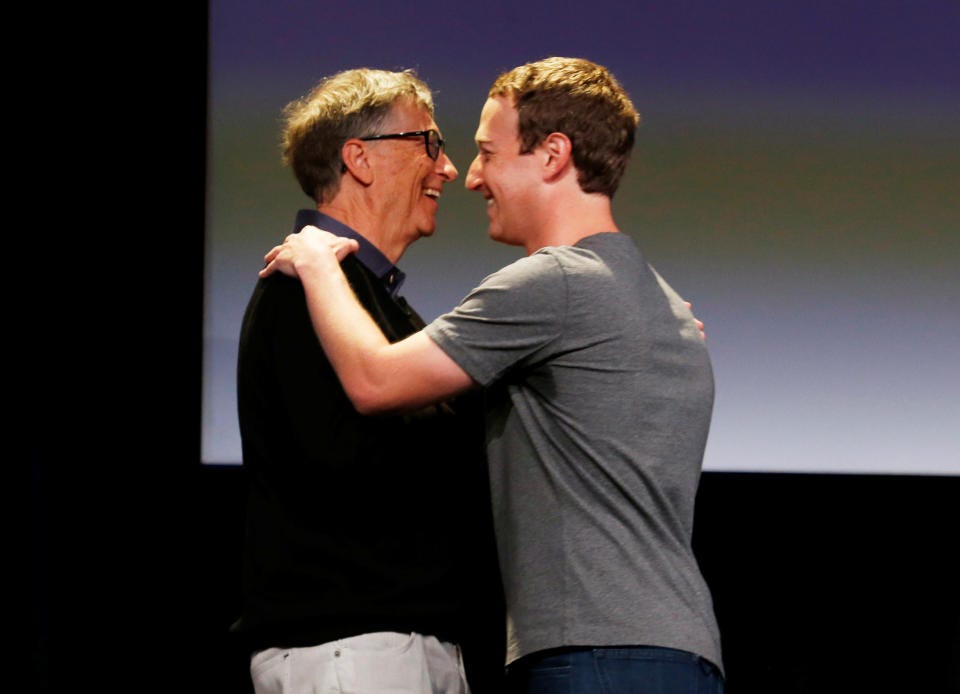
What Has Happened To Mark Zuckerberg?
How Rumsfeld forced the approval of lethal Aspartame.
Artificial sweeteners, MSG, PFAS, Glyphosate ... go organic!
Why is food poisoning legal?
26 November 2023
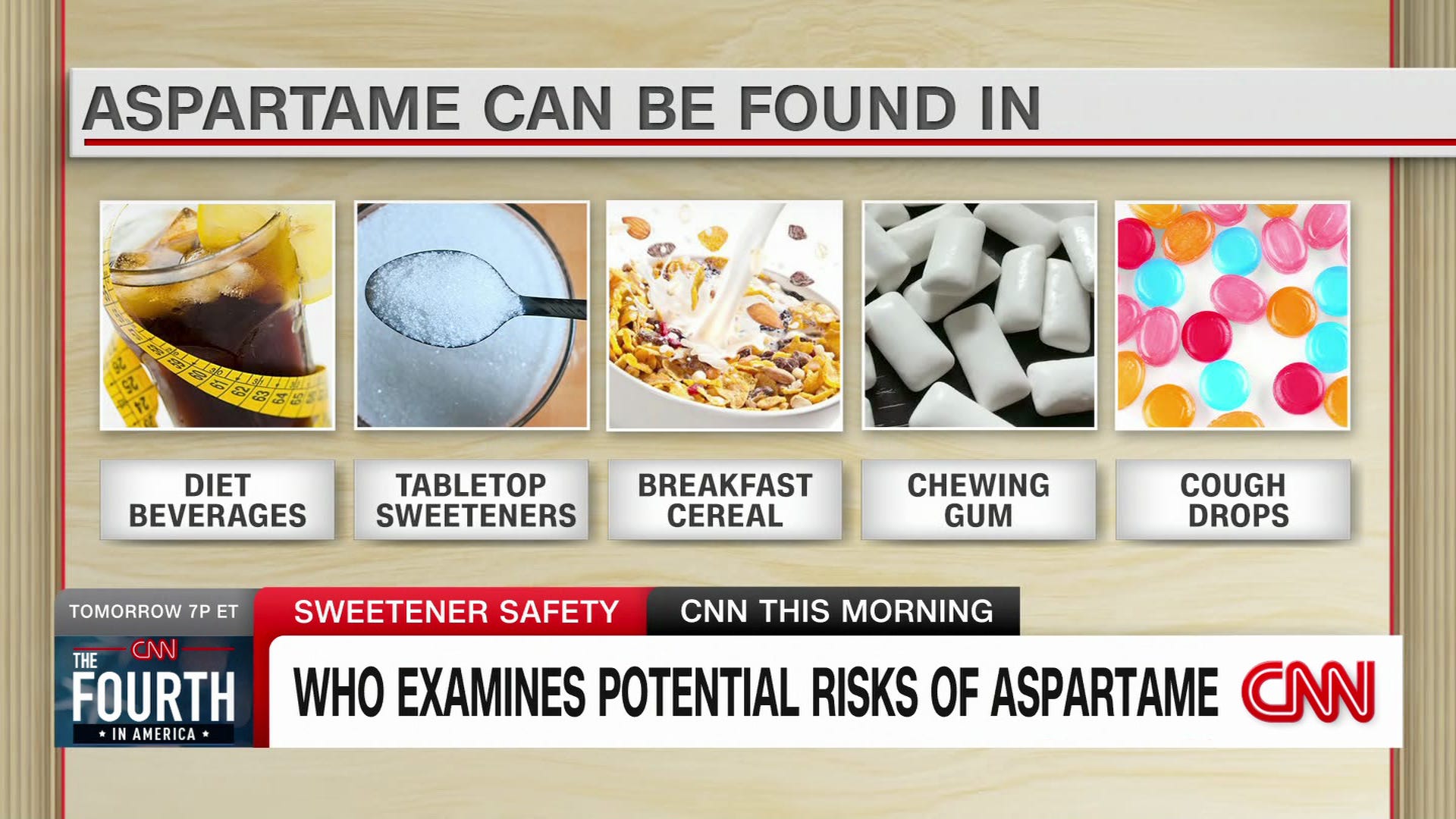
This article would be another tool you could share to keep waking-up the still-trusting sleepwalkers: some reject discussing injections, but they’d be open to food.
Solutions for “this” Democracy?
Rethinking science
19 December 2023
Unless we change it, we’re doomed to the next PLANdemic. And yet, nothing has changed, only got worse! This isn’t pessimism: just a realistic call to ACTION in the medical and scientific freedom communities.
Rethinking education for the real 21st century:
Why not earning $60,000 per year for educating your own children?
Call to action
1. Please share in social networks!
10 shares = waking up more people + especial gratitude:
Waking others up SAVES lives or livelihoods.
For example, send them free ebooks:
Vax-Unvax: Let the Science Speak
The more the awakened, the sooner this nightmare will be over !
2. Please subscribe
Scientific Progress is a reader-supported publication. To receive new posts and support my work, please consider becoming a free or paid subs:
3. Show your love in the tip jar =)
1 dollar makes a difference !

4. Please consider “buy me a coffee”:

5. Please reconsider a paid subscription:
6. Please consider commissioning an article for the topic of your preference:
7. Pray
Most important of all: let’s pray for each other and the conversion of our enemies !
The evil we see in the material world is just the echo from the spiritual battle between God and Satan and their followers, either human or angelic.
Darkness grows because the light of faith is fading. Faith is the root of a plant that withers without the sunlight of love and the water of prayer. God is love: ask Him for more faith in love.
Ironically, humans today can read about Project Artichoke and similar efforts and assume that they were some sort of isolated or botched effort, without realizing that they were actually successful in gradually decreasing humans' capacity to dream, imagine and even love as much as they were intended to. As it turns out, the recipe was as simple as Fluoride and Pop Music.
Blessings and appreciation from Sydney Australia.